
Out of Office… But Apparently Still Working?
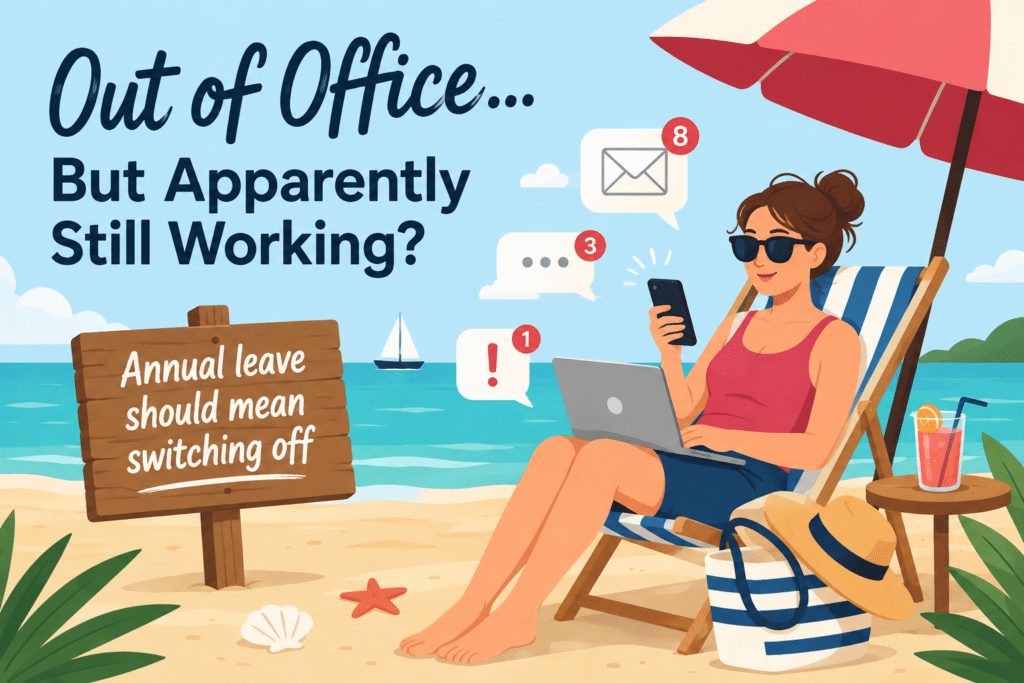
Why annual leave should actually mean switching off
Working during annual leave might sound like a contradiction, but it’s surprisingly common. You’ve booked the time off, the out-of-office is on, and the laptop is (hopefully) closed.
And then your phone pings.
“Sorry to bother you while you’re off, but…”
Sound familiar?
Working during annual leave has quietly become normal in some workplaces. It might be checking emails by the pool, replying to a quick Teams message or taking a call because “it’ll only take five minutes”.
Of course, sometimes it’s the employee choosing to check in. However, when people feel expected to remain available while they’re on holiday, that’s a different matter.
Annual leave is supposed to be a break from work. So, if your employees are still answering emails from a sun lounger, it might be time to look at why.
And it isn’t just holidays where boundaries matter – the wider conversation around the right to disconnect is becoming increasingly important too.
Working during annual leave: how does it happen?
Most managers probably aren’t deliberately trying to interrupt someone’s holiday.
Often, it starts innocently enough.
“Do you know where that file is?”
“Quick question – what did we agree with the client?”
“Sorry! I know you’re off…”
One message probably doesn’t feel significant. However, if employees know they’ll regularly be contacted while they’re away, they may start checking their inbox “just in case”.
Before long, annual leave isn’t quite annual leave anymore.
“But they choose to check their emails…”
And they might.
Some people genuinely find it easier to glance at their inbox occasionally rather than return to 300 unread emails.
However, it’s worth asking why they’re doing it.
Do they genuinely prefer it?
Or do they worry that something will go wrong while they’re away?
Perhaps they’ve seen senior managers answering emails from holiday and assume that’s what’s expected. Alternatively, maybe previous attempts to switch off completely have resulted in a mountain of problems waiting for them when they return.
Workplace culture isn’t only created by policies. It’s also created by what people see happening around them.
Annual leave is there for a reason
Taking proper time away from work matters.
Employees need opportunities to rest and recharge, and annual leave forms an important part of the UK’s Working Time Regulations.
Employers should therefore be careful about creating a culture where working during annual leave becomes an expectation.
After all, there’s not much point approving someone’s week off if they’re still effectively on call throughout it.
A proper break can also help employees return feeling more rested and ready to work – which is surely better than someone coming back from holiday feeling like they never really left.
Creating space for employees to properly switch off can also form an important part of supporting workplace wellbeing and managing stress.
Acas also provides guidance for employers and employees on holiday entitlement and taking annual leave
Good handovers make switching off easier
If the entire business grinds to a halt because Sarah from Accounts spends a week in Spain, the problem probably isn’t Sarah’s holiday.
It’s the handover.
Before employees go on leave, encourage them to think about:
- What needs to be completed before they go?
- What might come up while they’re away?
- Who can deal with urgent queries?
- What information does that person need?
- What genuinely needs to wait until they return?
Managers can help by making sure responsibilities are clear and that important information isn’t stored solely in one person’s head (or inbox!).
As a result, colleagues are less likely to need to send the dreaded:
“Sorry to disturb you on holiday…”
message.
Managers set the tone
This is a big one.
If you’re a manager who responds to emails at 10pm, works throughout your holiday and joins Teams calls from the airport departure lounge, your employees notice.
You might genuinely be happy doing it.
However, your team may interpret your behaviour as an unwritten expectation.
That’s why managers need to think about the example they’re setting. Clear communication from managers also plays a huge part in setting expectations and avoiding misunderstandings.
If you do choose to work unusual hours, tools such as scheduled email sending can also help. Your employee doesn’t necessarily need to know that inspiration struck you at 11:47pm on a Sunday.
What if there really is an emergency?
Occasionally, something genuinely urgent happens.
However, “urgent” shouldn’t mean:
“It would be easier if Jane just answered this.”
Businesses should have sensible contingency arrangements so that employees aren’t the only person capable of dealing with something while they’re away.
If someone’s role genuinely requires them to remain available or on call, that should be managed separately rather than quietly becoming an expectation during annual leave.
Creating a healthier annual leave culture
Preventing working during annual leave doesn’t require another 27-page policy.
Instead, start with some simple habits:
- Encourage proper handovers before leave.
- Agree who will cover urgent matters.
- Respect out-of-office messages.
- Avoid copying employees into emails unnecessarily while they’re away.
- Make it clear that nobody is expected to monitor their inbox on holiday.
- Encourage managers to lead by example.
Most importantly, give people permission to actually switch off.
Sometimes employees need to hear:
“You’re on holiday. We’ve got this.”
Final thoughts
Annual leave shouldn’t mean relocating your office to a sun lounger.
Of course, modern technology makes it incredibly easy to stay connected. However, just because we can contact someone doesn’t mean we always should.
Good planning, clear handovers and sensible boundaries mean employees can take the break they’ve booked without wondering what’s happening back at work.
The emails will still be there when they return.
Hopefully, the employee will return refreshed enough to deal with them.
Need a little help getting people to switch off?
If annual leave, workplace boundaries or people management are becoming a headache in your business, virtuHR can help.
From reviewing policies and processes to supporting managers with the everyday people stuff, get in touch to find out how I can make HR feel a little less complicated.