
The Probation Period Myth: Why Waiting Until the End Is Too Late
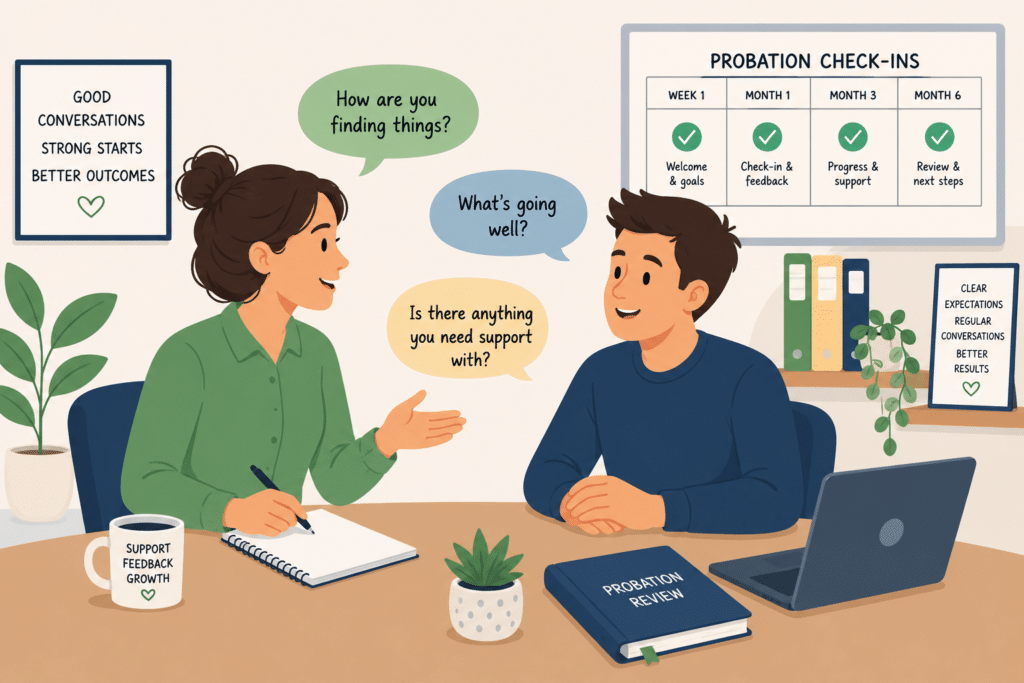
Many employers think of a probation period as a simple timeline. Give a new employee three or six months, see how they get on, then decide whether to confirm their employment.
In reality, a probation period isn’t something that happens at the end of a new starter’s first few months—it’s something that should be happening throughout them.
One of the biggest mistakes I see is managers waiting until the final probation review before raising concerns. By then, everyone is on the back foot. The employee is surprised, the manager is frustrated, and difficult decisions suddenly become much harder.
A successful probation period isn’t about reaching the finish line. It’s about making sure both employer and employee know where they stand every step of the way.
It also relies on regular communication. As I discussed in Managers Aren’t Mind Readers: Why Communication Still Solves Most HR Problems, small conversations early on often prevent much bigger issues later.
Why probation periods go wrong
Most probation problems don’t happen because someone is unsuitable for the role.
They happen because communication is delayed.
Managers are busy. New employees are finding their feet. Small concerns get pushed aside with thoughts like:
“Let’s give them a bit more time.”
or
“I’m sure they’ll improve.”
Sometimes they do.
But if they don’t, you’ve lost valuable opportunities to provide support, set expectations and document what has happened.
By the time the probation review arrives, the employee may genuinely believe everything has been going well.
Why the first weeks of a probation period matter the most
The best probation periods begin on day one.
A thorough induction helps new employees understand:
- what success looks like
- what’s expected of them
- how they’ll be supported
- when feedback will be given
- who they can ask for help
Starting with clear expectations reduces uncertainty and gives employees the best possible chance of succeeding.
A structured induction is one of the best ways to achieve this. Take a look at my blog on effective onboarding for practical tips on helping new starters settle in successfully.
Feedback shouldn’t come as a surprise
Probation reviews should never be the first time an employee hears that something isn’t quite right.
Instead, managers should have regular conversations throughout the probation period.
These don’t need to be lengthy formal meetings. Often, a simple check-in can make all the difference.
Discuss:
- what’s going well
- any areas for improvement
- any training or support needed
- objectives for the coming weeks
Regular conversations help build confidence, identify issues early and avoid awkward surprises later.
Keeping records throughout the probation period
Documentation isn’t about creating paperwork for the sake of it.
It’s about recording what was discussed, what support was offered and what was agreed.
Brief notes following supervision sessions or probation meetings can be invaluable if concerns continue.
Good records also demonstrate that the organisation has acted fairly and consistently.
Don’t be afraid to extend probation
Sometimes an employee is showing potential but isn’t quite meeting the required standard yet.
An extension to probation can provide additional time for training, supervision and support.
However, extensions should never be automatic.
Managers should clearly explain:
- why the probation is being extended
- what improvements are expected
- what support will be provided
- how success will be measured
- when the next review will take place
Employees should leave the meeting knowing exactly what is expected.
If you’re considering extending a probation period, it’s important to communicate the reasons clearly and follow a fair process. The ACAS guidance on probation contains practical advice for employers.
A probation period is a two-way process
Remember, probation isn’t just about assessing the employee.
It’s also an opportunity for the employee to decide whether the organisation is right for them.
Regular conversations encourage questions, identify concerns early and help new starters settle into their role more quickly.
A positive probation experience often leads to stronger engagement and better retention.
Common mistakes employers make
Some of the most common probation pitfalls include:
- Waiting until the final review to discuss concerns.
- Failing to document conversations.
- Assuming no news is good news.
- Providing vague feedback rather than specific examples.
- Missing scheduled review meetings.
- Extending probation without clear objectives.
- Confirming probation simply because the deadline has arrived.
Fortunately, all of these are preventable with good planning and regular communication.
Making every probation period a success
Probation shouldn’t feel like a pass-or-fail test at the end of six months.
It should be an ongoing process of support, feedback and development.
When managers set clear expectations, hold regular check-ins and address concerns early, probation becomes much less about difficult conversations—and much more about helping people succeed.
After all, the best probation reviews don’t start in month six.
They start in week one.
Need support?
Whether you need help reviewing your probation process, creating probation review templates or training managers to have more effective conversations, virtuHR can help.
Get in touch to find out how we can support your business.