
HR Metrics That Matter: What UK Employers Should Be Tracking (and Why)
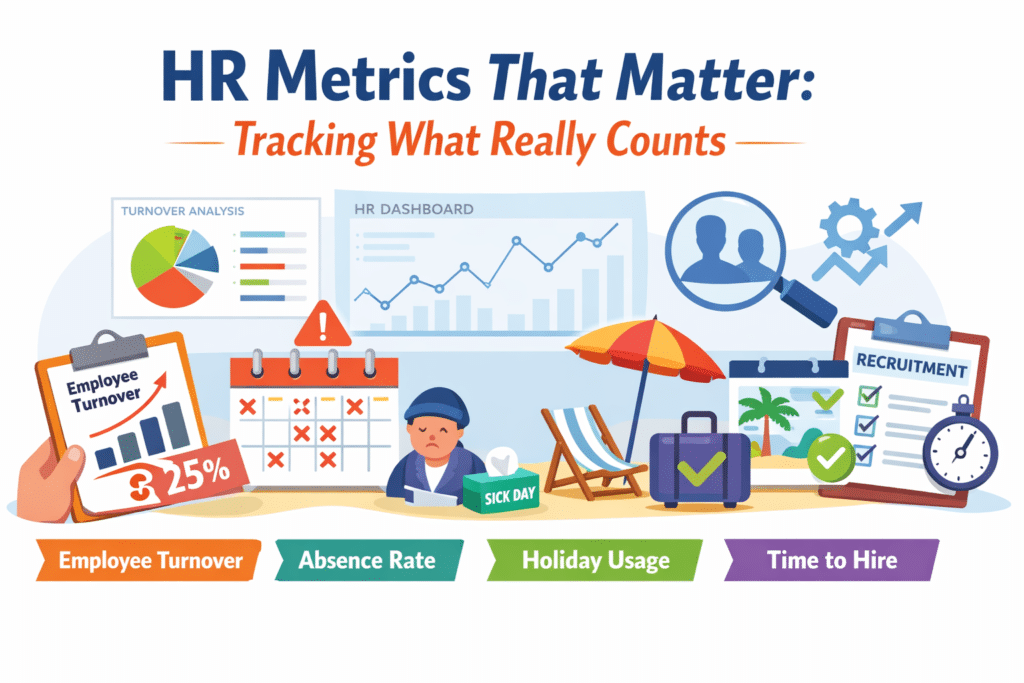
HR metrics that matter are not about complex dashboards or corporate-level reporting — they’re about giving business owners clear, practical insight into what’s really happening in their workforce.
Many small businesses collect people data such as absence, turnover or holiday usage, but aren’t always sure what it’s telling them or how to use it effectively. Without a clear focus, important warning signs can be missed, increasing the risk of employee relations issues, disengagement and legal exposure.
By understanding and tracking the HR metrics that matter, employers can spot problems early, support managers more effectively and make informed people decisions that protect both the business and its employees.
Why HR Metrics Matter (Especially for Small Businesses)
HR metrics help you move from gut instinct to informed decision-making.
Used properly, they can help you:
- Spot issues before they escalate into grievances or claims
- Improve retention and reduce recruitment costs
- Support managers more effectively
- Demonstrate fair and consistent people management
- Stay compliant with employment law
And no — this doesn’t mean turning your business into a spreadsheet exercise. It’s about tracking the right data, not all the data.
1. Employee Turnover Rate
What it tells you
How often employees are leaving your business.
Why it matters
High turnover can indicate:
- Poor management
- Pay or workload concerns
- Lack of development or progression
- Cultural or wellbeing issues
What to watch for
- Patterns by department or manager
- Early exits (within first 6–12 months)
- Repeated resignations citing similar reasons
💡 Exit interviews are invaluable here — but only if you actually analyse the feedback.
2. Absence Rate (and Patterns)
What it tells you
How much sickness absence is occurring and whether it’s becoming a problem. This is particularly important where employers have a sickness absence management policy but aren’t consistently applying it — and ACAS provides clear guidance on managing sickness absence fairly and lawfully.
Why it matters
Absence metrics can highlight:
- Burnout or workload issues
- Poor morale
- Underlying health or wellbeing concerns
- Risk of inconsistent management
What to watch for
- Frequent short-term absences
- Patterns around Mondays, Fridays or busy periods
- Differences between teams or managers
👉 This is particularly important where employers have a sickness absence management policy but aren’t consistently applying it.
3. Holiday Usage (Including Statutory Leave)
What it tells you
Whether employees are actually taking their annual leave entitlement.
Why it matters
Failing to ensure staff take their statutory holiday can:
- Create legal risk
- Lead to burnout and disengagement
- Result in last-minute leave clashes or carry-over disputes
What to watch for
- Employees regularly carrying over leave
- Staff not taking the 4 weeks’ statutory entitlement
- Managers approving leave late — or not at all
💡 Holiday metrics are a quiet but important compliance safeguard.
4. Time to Hire
What it tells you
How long it takes to recruit someone from advert to offer.
Why it matters
Long recruitment timelines can indicate:
- Poor role clarity
- Over-complex recruitment processes
- Pay or benefits not matching the market
- Capacity pressures on managers
What to watch for
- Delays at approval or interview stage
- Roles that repeatedly fail to attract candidates
- Drop-off between offer and acceptance
5. Probation Outcomes
What it tells you
How many new starters successfully pass probation — and how many don’t.
Why it matters
Probation data often highlights:
- Weak onboarding
- Unclear role expectations
- Poor early management support
- Recruitment mismatches
What to watch for
- Repeated probation extensions
- Terminations shortly after probation
- Inconsistent probation reviews
👉 This is one of the most under-used but most revealing HR metrics for SMEs.
6. Employee Relations Issues
What it tells you
How often formal issues are arising.
This can include:
- Grievances
- Disciplinary cases
- Performance improvement plans (PIPs)
Why it matters
An increase in ER issues often signals:
- Poor management capability
- Inconsistent decision-making
- Cultural or communication breakdowns
What to watch for
- Repeat issues involving the same managers
- Grievances following change or restructure
- Escalation from informal to formal processes
7. Training & Development Uptake
What it tells you
Whether employees are receiving (and completing) training.
Why it matters
Low uptake can suggest:
- Lack of time or capacity
- Poor prioritisation
- Limited development culture
What to watch for
- Mandatory training not completed
- New managers without people-management training
- Development promises not being followed through
💡 This links directly to retention and engagement.
What HR Metrics You Don’t Need (Yet)
Many SMEs feel pressure to track:
- Engagement scores
- Productivity indices
- Complex performance analytics
These can be useful — but only once your core HR metrics are solid.
If basics like absence, holiday, probation and ER issues aren’t being tracked consistently, start there.
How Often Should You Review HR Metrics?
For most small businesses:
- Monthly: absence, holiday, live ER issues
- Quarterly: turnover, probation outcomes, recruitment data
- Annually: trends, patterns and risk areas
You don’t need fancy software — but you do need consistency.
Final Thoughts: Metrics Are Only Useful If You Act on Them
HR metrics aren’t about blame or box-ticking. They’re about visibility.
When you track the HR metrics that matter, you can:
- Intervene earlier
- Support managers better
- Reduce legal risk
- Create a healthier, more sustainable workplace
And if you’re not sure what to track or how to interpret the data — that’s exactly where HR support can make a real difference.