
Employee Has Gone Off Sick – What Can I Actually Ask Them?
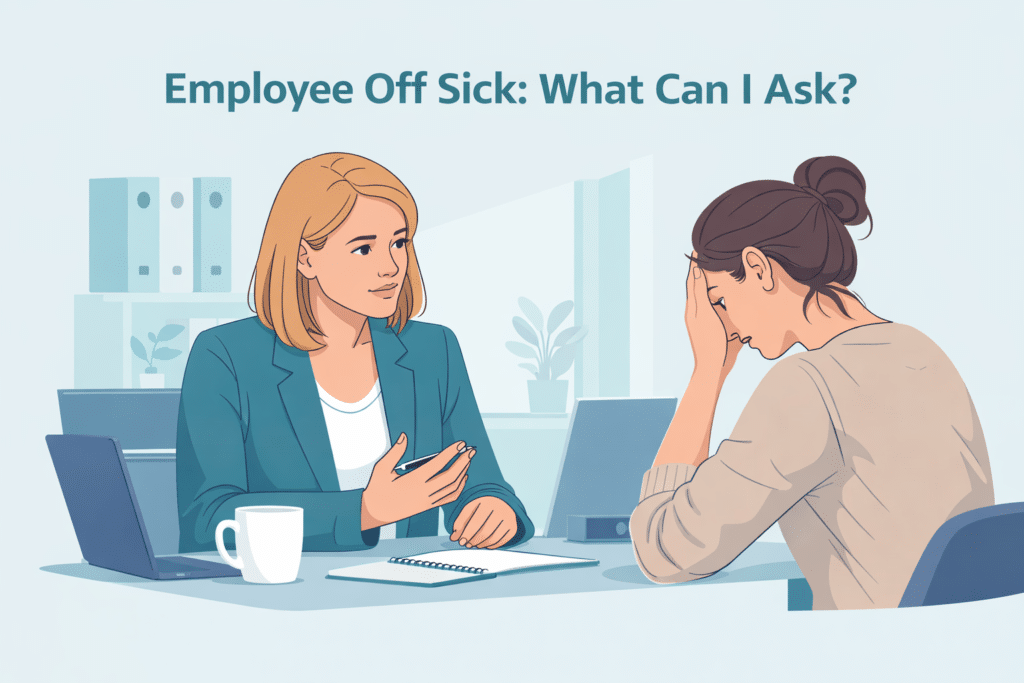
When an employee goes off sick, it can leave managers feeling unsure about what they can and can’t say.
You want to be supportive. However, you also need to understand what’s going on, how long they might be off, and what this means for the business.
So where’s the line?
In this blog, we break down what you can ask, what to avoid, and how to handle sickness absence with confidence (and compassion).
What to say to an employee off sick
The short answer: you can ask reasonable, work-related questions — but importantly, how you ask matters just as much as what you ask.
Here are some appropriate areas to cover:
✔️ The nature of their absence (to a degree)
You can ask for a general understanding of what’s wrong. For example:
- “Are you comfortable sharing broadly what’s going on?”
You don’t need full medical detail — and they don’t have to give it.
✔️ Likely duration of absence
It’s completely reasonable to ask about timescales – this helps you plan operationally.
- “Do you have any indication of how long you might be off?”
✔️ Whether they’ve sought medical advice
You can ask:
- “Have you been able to speak to your GP?”
This is especially relevant for longer-term absence.
✔️ What support they might need
Importantly, this is where good employers stand out:
- “Is there anything we can do to support you at the moment?”
✔️ Keeping-in-touch preferences
Agreeing expectations avoids awkwardness later:
- “How would you prefer we keep in touch while you’re off?”
🚫 What should you avoid asking an employee off sick?
This is where things can easily go wrong. In particular, certain questions can feel intrusive or inappropriate.
❌ Don’t ask for excessive medical detail
Avoid questions like:
- “What exactly is your diagnosis?”
- “What medication are you on?”
This can stray into sensitive personal data territory.
❌ Don’t question the legitimacy of the illness
Even if you have doubts, avoid:
- “Are you sure you’re not well enough to work?”
This can damage trust and potentially lead to claims.
❌ Don’t apply pressure to return
Phrases like:
- “We really need you back”
- “When will you definitely return?”
These comments may seem harmless. However, they can feel coercive.
Employee off sick: Confidentiality & Data Protection
Health information is classed as special category data under UK GDPR. Therefore it must be handled carefully.
This means:
- Only collect what you genuinely need
- Keep it confidential
- Don’t share it wider than necessary
What does “good” look like in practice?
In practice, a simple, balanced approach might sound like:
“Hi [Name], I’m really sorry to hear you’re unwell. Please don’t worry about work — focus on getting better.
When you feel able, it would be helpful to understand roughly how you’re doing and whether you have any idea of timescales, just so we can plan.
Let me know how you’d prefer us to stay in touch while you’re off.”
Supportive + practical = the sweet spot.
When to take extra care with an employee off sick
That said, take extra care where absence relates to:
- Mental health
- Pregnancy-related illness
- A potential disability under Equality Act 2010
In these cases, a more tailored and sensitive approach is essential — and you may need to consider reasonable adjustments.
Key takeaway for dealing with employee off sick
Overall, you don’t need to avoid the conversation — you just need to approach it the right way.
✔️ Ask what you need to manage the business
✔️ Respect boundaries and privacy
✔️ Lead with empathy
For official information on employee rights and sick leave, you can also refer to guidance on GOV.UK.
Need support managing sickness absence?
Handling absence well can make a huge difference to both your people and your business.
If you’re unsure how to approach a situation, or want to sense-check your processes, feel free to get in touch — I’m always happy to help.